


Scaling your business is an adrenaline rush. You’ve found the perfect candidate, the offer is signed, and you’re ready to get to work. But what do you do about the paperwork?
Hiring isn’t just about a paycheck and a desk; it’s a legal process that requires certain paperwork. One missed form or a late filing can lead to hefty fines, compliance audits, and unnecessary stress.
At AlexandHR, we specialize in helping small businesses transition away from manual chaos.. Whether you’re hiring your first employee in Huntsville or expanding your team in Miami, this checklist ensures you stay compliant from day one.
Federal Requirements:
Regardless of where your business is located, these federal requirements are non-negotiable. Compliance isn’t optional.
1. EIN (Employer Identification Number)
If you are hiring, you need an EIN from the IRS. This is your business’s social security number for tax purposes. If you’ve been operating as a sole proprietor without one, now is the time to apply.
2. Form I-9 (Employment Eligibility Verification)
You must verify that every new hire is legally authorized to work in the U.S.
- The Rule: The employee must complete Section 1 on or before their first day. You, the employer, must complete Section 2 within 3 business days of their start date.
- IMPORTANT: You must physically (or via authorized remote process) examine original documents. Don’t just accept a photo, verify the real thing.
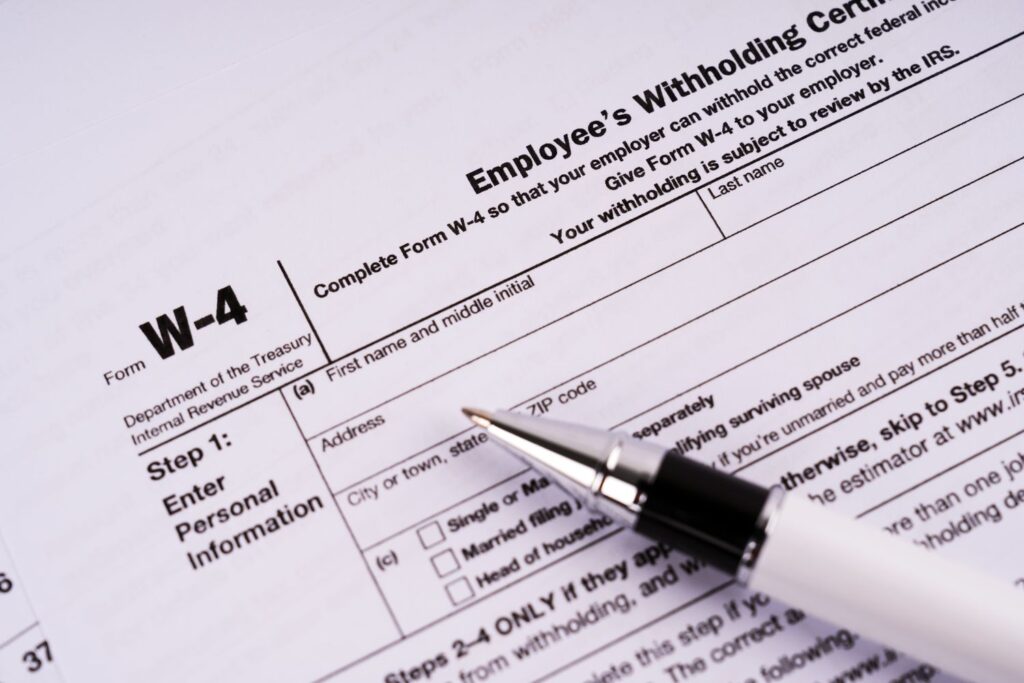
3. Form W-4 (Employee’s Withholding Certificate)
This form determines how much federal income tax to withhold from your employee’s pay.
- The Rule: Collect this before the first paycheck is issued to ensure the correct amount of taxes are collected.
- Pro Tip: Keep the most recent version on file. If an employee’s life situation changes (marriage, kids), they may need to submit a new one.
4. New Hire Reporting Basics
Federal law requires all employers to report new hires to a state directory. While the reporting happens at the state level (which we will cover below), the requirement is a federal mandate.
5. Record Retention Rules
Don’t toss those papers once the employee is hired.
- I-9s: Keep for 3 years after the date of hire or 1 year after termination (whichever is later).
- Tax Records: Keep for at least 4 years.
- SOPs: Maintain clear Standard Operating Procedures for how you handle these files to ensure consistency during an audit.
Alabama-Specific Requirements: The “Yellowhammer” Rules
Alabama has specific statutes that add a layer of complexity to the hiring process, particularly regarding immigration and reporting speed.
1. Form A-4 (Alabama Withholding Tax Exemption Certificate)
While the W-4 handles federal taxes, the A-4 is required for Alabama state income tax withholding. Required at hire.
2. Mandatory E-Verify
In Alabama, E-Verify isn’t just a “best practice”, it’s actually the law. Alabama requires all employers to use the federal E-Verify system to confirm the employment eligibility of all new hires.
- The Result: You must be enrolled in E-Verify and maintain your Memorandum of Understanding (MOU) as proof of compliance.
3. Accelerated New Hire Reporting
Alabama is faster than the federal standard.
- The Deadline: You must report new hires within 7 days of their hire date.
- The Portal: Use the Alabama Department of Labor (ADOL) New Hire Portal.
- The Tech Rule: If you have 5 or more employees, electronic reporting is mandatory. If you’re still doing this manually, it’s time to leverage HRIS automation such as Gusto.
4. Workers’ Compensation
In Alabama, if you have 5 or more employees (full-time or part-time), you are generally required to carry workers’ compensation insurance. This includes corporate officers.

Florida-Specific Requirements: The “Sunshine State” Rules
Florida offers some administrative relief in terms of taxes but has expanded its reporting requirements for contractors.
1. No State Income Tax (A Major Perk!)
Florida does not have a state personal income tax.
- The Result: There is no state withholding form equivalent to the Alabama A-4. One less piece of paper for your “to-do” list!
2. New Hire Reporting (Employees + Contractors)
Florida gives you a bit more breathing room than Alabama, but the scope is wider.
- The Deadline: Within 20 days of hire.
- The Contractor Rule: This is where many businesses trip up. In Florida, you must also report independent contractors who are paid $600 or more in a calendar year.
- The Portal: Reports are filed through the Florida Department of Revenue’s Child Support Program.
3. SUTA (Reemployment Tax) Registration
New employers in Florida must register with the Department of Revenue for Reemployment Tax (formerly Unemployment Tax). This ensures you are paying into the fund that supports workers if they are laid off.
The Process vs. The Result
| The Process | The Result |
|---|---|
| Manual Data Entry | Risk of errors, late filings, and “time poverty.” |
| Automated HRIS Setup | Compliance on autopilot. Forms are signed digitally and filed instantly. |
| DIY Compliance Research | Stress and uncertainty about changing state laws. |
| Fractional HR Partnership | An expert handles the “how” while you focus on the “who.” |
Quick Comparison: Alabama vs. Florida
| Requirement | Alabama | Florida |
|---|---|---|
| State Withholding Form | Yes (Form A-4) | No |
| Reporting Deadline | 7 Days | 20 Days |
| E-Verify Mandate | Yes (All Employers) | Required for Public/State Contractors* |
| Contractor Reporting | Standard Federal Rules | Mandatory for $600+ pay |
*Note: Florida recently expanded E-Verify requirements for private employers with 25+ employees; always check current thresholds with an HR consultant.

Stop Drowning in Paperwork
Hiring should be a celebration of growth, not a weekend spent buried in tax forms. At AlexandHR, we don’t just give advice; we implement solutions.
We can help you set up platforms like Gusto, Rippling, or BambooHR to ensure that every single one of these forms is handled automatically. Affordable support. Automated administration. Real support where it counts.
Ready to streamline your onboarding?
Book a 15-minute consultation today and let’s get your HR infrastructure built for scale.
Common Questions (FAQ)
Q: Can I just keep digital copies of the I-9?
A: Yes, provided your system meets USCIS electronic storage requirements (indexing, audit trails, and security). Most modern HRIS platforms handle this natively.
Q: What happens if I miss the reporting deadline?
A: States can levy fines per employee for non-compliance. In Alabama, the 7-day window is particularly tight. Automating this through your payroll provider is the best way to avoid “late fees.”
Q: Do I need a different EIN for employees in different states?
A: No, your federal EIN stays the same, but you will need to register for state-specific withholding and unemployment accounts in every state where you have employees.